Understanding Cyber Threat Intelligence (CTI)
Challenges, Benefits and Integration into a Modern Information System
Faced with the exponential increase in cyber threats, Cyber Threat Intelligence (CTI) has become an essential pillar of a proactive and resilient cybersecurity strategy. While the term CTI is ubiquitous, its precise definition, its real added value, and the means of effectively integrating it into an Information System (IS) are sometimes poorly understood – even among the most dedicated teams.
The CTI: a compass in a world of uncertainty
Cyber Threat Intelligence goes far beyond simply collecting technical indicators or receiving IoC (Indicators of Compromise) feeds. It is a structured, iterative approach that aims to collect, analyze, and then contextualize raw data in order to transform it into actionable intelligence tailored to the business and operational context of each organization.
CTI, in its most academic definition, is knowledge based on evidence from multiple sources (technical, human, OSINT, Dark/Deep Web, etc.), analyzed to inform strategic and operational security decisions.
The three levels of CTI: from technical to strategic
A successful threat intelligence approach offers a true “360° view”, because it addresses multiple needs:
- Tactical : Deliver concrete indicators that can be used immediately by security solutions (SIEM, EDR, SOC), reduce the mean time to detection and response (MTTD/MTTR).
- Operational : To help anticipate the modus operandi of adversaries, understand the evolution of TTPs (Tactics, Techniques, Procedures) and strengthen the defensive posture.
- Strategic Providing decision-makers with a clear view of their exposure, emerging risks and sector trends: this is the essential support for relevant budget planning, investment prioritization and preparation for regulatory compliance (NIS2, DORA…).
Why is CTI a business differentiator?
Threat intelligence has become an essential tool, transforming security from a reactive to a proactive posture. The benefits are tangible:
- Blind spot reduction: analysis of shadow IT, monitoring of attacks targeting the brand, reputation or portfolio of uncontrolled assets.
- Prioritizing actions: intelligent prioritization of vulnerabilities according to their exploitation (and not solely according to theoretical scores).
- Anticipating attacks: to be alerted before the operation, and not when the irreparable occurs.
- Optimizing ROI in Security: each action is aligned with the real threat, resources are allocated where they produce the most value.
The value of "enhanced" CTI: the indispensable human factor
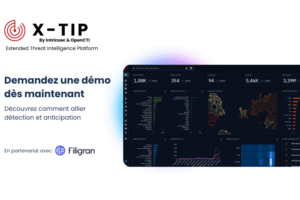
While automation and AI have revolutionized data collection and processing capabilities, effective CTI remains rooted in human expertise. Only contextualized analysis, conducted by specialists, can distinguish weak signals from false positives and tailor the response to each organization's specific business needs. This hybrid approach, combining proprietary technology, advanced AI, and expert human analysis, is at the heart of Intrinsec's CTI offering (particularly through the X-TIP platform).
Integrating CTI into your IT system: from technology to governance
In practical terms, adopting CTI is not simply a matter of subscribing to a stream of indicators. It is an approach, structured around:
- Identifying the organization's specific needs (business requirements, critical assets, sectoral challenges).
- The implementation of a structured intelligence cycle: planning, collection, analysis, dissemination and continuous reassessment.
- Integrating intelligence into the daily workflow, from the SOC analyst to the security manager, to embed Threat Intelligence in incident management, risk analysis, and regulatory monitoring.
- A suitable platform, open to interconnection (SIEM, EDR, SOAR), scalable, capable of providing actionable deliverables (sector reports, personalized alerts, dashboards…).
At Intrinsec, this approach translates into a range of services from Digital Risk Protection (DRPS) to External Attack Surface Management (EASM), to advanced Threat Intelligence services.
Conclusion: CTI is no longer an option, it is a lever for resilience and excellence
The threat ecosystem is evolving at an unprecedented pace. Faced with the diversity and sophistication of attacks, CTI is emerging as the backbone of effective security aligned with business objectives. Better informed, your teams become more agile, your decisions more relevant, and your organization more resilient.
Want to go further?
Do you want to transform your approach to security, gain anticipation, responsiveness, and visibility? Discover Intrinsec's CTI offerings or request a personalized demo to explore how intelligence can become a strategic asset for your cybersecurity governance.