

Our Public Entity program assesses information systems and IT environments to define an operational security roadmap. We conduct risk analyses to map vulnerabilities and prioritize risk management for the benefit of the CIO. IT security audits identify security flaws on servers, workstations, and applications to secure systems. Information system security encompasses network security, centralized authentication, and strong passwords. Our recommendations include encryption and cryptography measures to protect the confidentiality of sensitive and confidential data. This approach strengthens overall digital security and reduces exposure to cyberattacks and cybercrime. We help formalize a coherent IT security policy and procedures for managing security incidents. IT mapping identifies critical IT systems, connected devices, and operational dependencies. Our experts integrate ANSSI recommendations and CNIL requirements to align compliance, information security, and resilience. The approach combines audits, penetration testing, and architecture reviews to assess the security level and protection of systems. We evaluate data flow protection, system security, and information systems security in cloud or hybrid environments. The action plan prioritizes vulnerability remediation and proposes security solutions tailored to public sector challenges. Our technical recommendations include network segmentation, server hardening, and antivirus/EDR deployment to secure the system. We test authentication mechanisms, IAM policies, and privileged access procedures to mitigate IT risk. The framework includes incident playbooks and exercises to improve operational response to security incidents. We support the implementation of security measures for connected systems and services exposed to the internet. Information security is strengthened through confidentiality controls, encryption of data at rest and in transit, and cryptographic best practices. Our audits help to align security policy, information security governance, and risk management at the executive committee and IT department levels. The approach aims to make IT systems secure, traceable, and compliant with regulatory requirements (NIS2, LPM, etc.). We assess the operational maturity of the SOC and propose indicators to measure the level of security over time. Our interventions reduce the attack surface for hackers and other malicious actors targeting local authorities and public institutions. Deliverables include risk mapping, risk matrices, remediation plans, and milestones for securing systems and protecting data. We support the data controller and the IT department in formalizing responsibilities and ensuring secure and securable systems. Request an IT security audit to obtain a pragmatic and prioritized roadmap to protect the security of your information system.
Concrete challenges in the public sector
Whether you are a local authority, public body, healthcare facility, operator, or government agency, cybersecurity has become a cornerstone of your operations. You are exposed to threats, audited on your practices, and encouraged by the government to adopt modern governance and coherent systems.
Comply with regulatory obligations
NIS2, CyberScore, LPM, ANSSI Instruction.
Modernizing security governance
Set up the reference frameworks (ISSP, ISSC Committee, etc.).
Protecting critical data/IT systems
Health, education, HR, IT/OT infrastructure.
Supervise sensitive activities
Event logs, alerts, controlled escalations.
Organize the incident response
Documented processes, a team that can be mobilized, committed partners.
Strengthening global resilience
PCA, PRA, backups, crisis simulations.
Upskilling agents
Ongoing awareness training, cybersecurity training adapted to the professions.
What this course allows you to pilot
Strategy & Governance
Proposed actions
Drafting or updating the Information Systems Security Policy (ISSP), Information Systems Security Committee, RACI matrix
Business value
Align security responsibilities with public organizational charts
Risks & Compliance
Proposed actions
Regulatory mapping, CyberScore or NIS2 compliance
Business value
Having deliverables that can be used as evidence against the administration or the prefect

Architecture & SecOps
Proposed actions
Access review, M365/AD hardening, Cloud doctrine SecNumCloud
Business value
Apply the ANSSI recommendations clearly and proportionally.
Cyber Defense Operations
Proposed actions
Detection via managed SOC, EDR deployed on critical endpoints
Business value
Consistent monitoring adapted to available resources

Incident & Crisis
Proposed actions
Development of procedures, quick reference guides, supervised crisis exercises
Business value
Be operational from the first alert or request from CERT-FR

Resilience
Proposed actions
Cloud-based business continuity planning, reversibility, critical backups, lessons learned
Business value
Service continuity, continuous improvement, multi-site management
Cyber culture
Proposed actions
Awareness kit for staff, elected officials, Directors General of Services, and professional support materials
Business value
Create a cybersecurity culture that is inclusive and understandable to all
Our "Public Entity" track is designed for different types of organizations:
Local authorities: regions, departments, metropolitan areas, urban areas, cities
Public institutions: hospitals, public health establishments, operators, institutional landlords
Organizations subject to enhanced regulatory obligations: NIS2, LPM, etc.
Organizations wishing to pool or industrialize their security
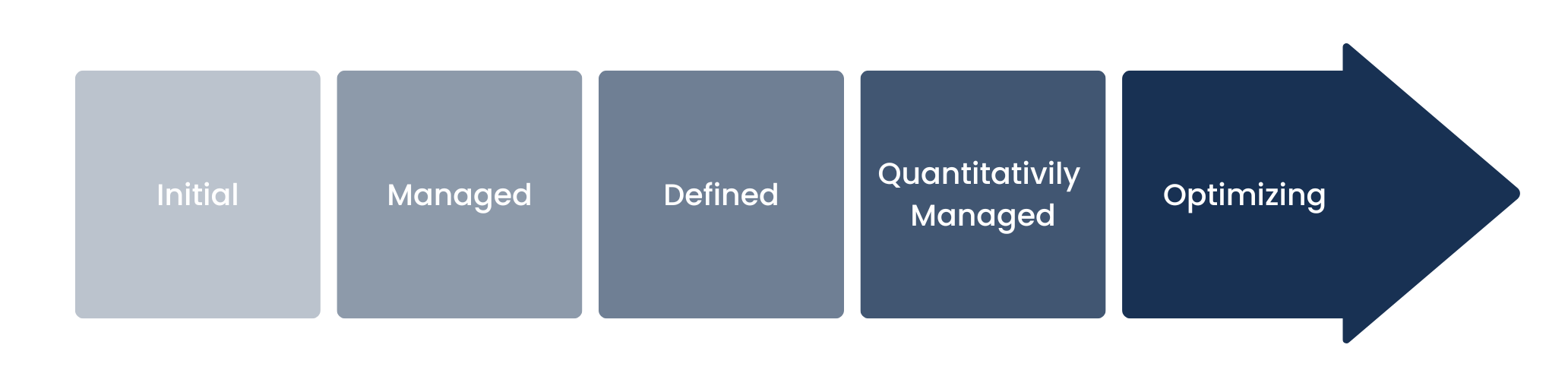
Target maturity level
Course Content: Public Entity
Scoping & Audit (Activatable)
- Information Systems Security Mapping: documentation, scope, current levels
- 12-18 month security roadmap aligned with ANSSI doctrine
- Compliance planning (NIS2, LPM, CyberScore)
Building blocks of security
Formalized governance
Charter, Information Systems Security Policy, Information Systems Security Committee, realistic progress plan
SOC or supervision
Log integration, cloud/workstation monitoring, managed escalation
Cloud and Access Review
SecNumCloud compliance, Active Directory/M365 hardening
sectoral PCA/PRA
Methodology, formalization, expression of critical needs
Incident Response
Quick reference guides, external support, team mobilization
Raising awareness among staff and elected officials
Short, illustrated materials, quizzes/e-learning, focusing on key techniques
Audit and penetration testing
External security audit or realistic technical assessment (workstation, website, email, network access)
IT mapping / master plan
Identify critical assets, technical interdependencies, and lay the foundations for a clear digital framework.
Exposed Assets Monitoring (EASM)
Map the services accessible from the Internet (webmail, business applications, admin interfaces) and reduce the attack surface.
- Meeting the requirements of prefectures, ARS (Regional Health Agencies), or centralized project promoters
- Structuring cross-functional security, aligned with business lines and departments
- Laying the right foundations for maturity without burdening the organization
- To be credible in the face of an audit or a major malicious act
- Making security visible, motivating, measurable
A compliant, concrete and actionable approach
Situation encountered
- Old or disparate documentation
- Critical systems poorly mapped
- Difficulty in structuring a security plan
- Lack of centralized supervision
- Teams with little cultural exposure
Our contribution
- Up-to-date documentation, aligned with regulatory requirements
- A clear vision of IT security dependencies and priorities
- An actionable roadmap, adapted to internal capacity
- A SOC component that can be shared and is geared towards useful alerts
- Engaging educational modules, accessible to all
Practical details
Duration
6 to 18 months depending on the scope activated
Delivery method
either independently or in support of an internal CISO/CIO
Compliance
Cloud doctrine, NIS2, GDPR, LPM
Areas covered
Business systems, MS365, public or sovereign cloud, Active Directory
Ready to Strengthen Your Cybersecurity?
Don't let threats catch you off guard. Discover how our SOC, combined with cutting-edge technologies, can secure your organization.